Ceiling stains or leaks
Water marks, damp drywall, or musty attic odors can point to flashing, shingle, or ventilation problems.
Describe the leak, storm damage, missing shingles, or other concern and confirm current scheduling by phone.
Call (910) 812-8394 →Calls may be recorded for quality and training.
Roof problems don't wait
A fast inspection gives you a clear answer before the next Carolina downpour turns a loose shingle or hidden leak into a bigger repair.
Water marks, damp drywall, or musty attic odors can point to flashing, shingle, or ventilation problems.
Wind can break the roof's weather seal and expose vulnerable areas long before water becomes visible inside.
Hail, fallen limbs, and strong gusts can cause subtle impact damage that is easy to miss from the ground.
Cracked seals around chimneys, walls, vents, and pipe boots are common entry points that targeted repairs can address.
Focused residential roof repair
Every visit starts by tracing the problem, documenting what we find, and defining the smallest responsible repair scope.
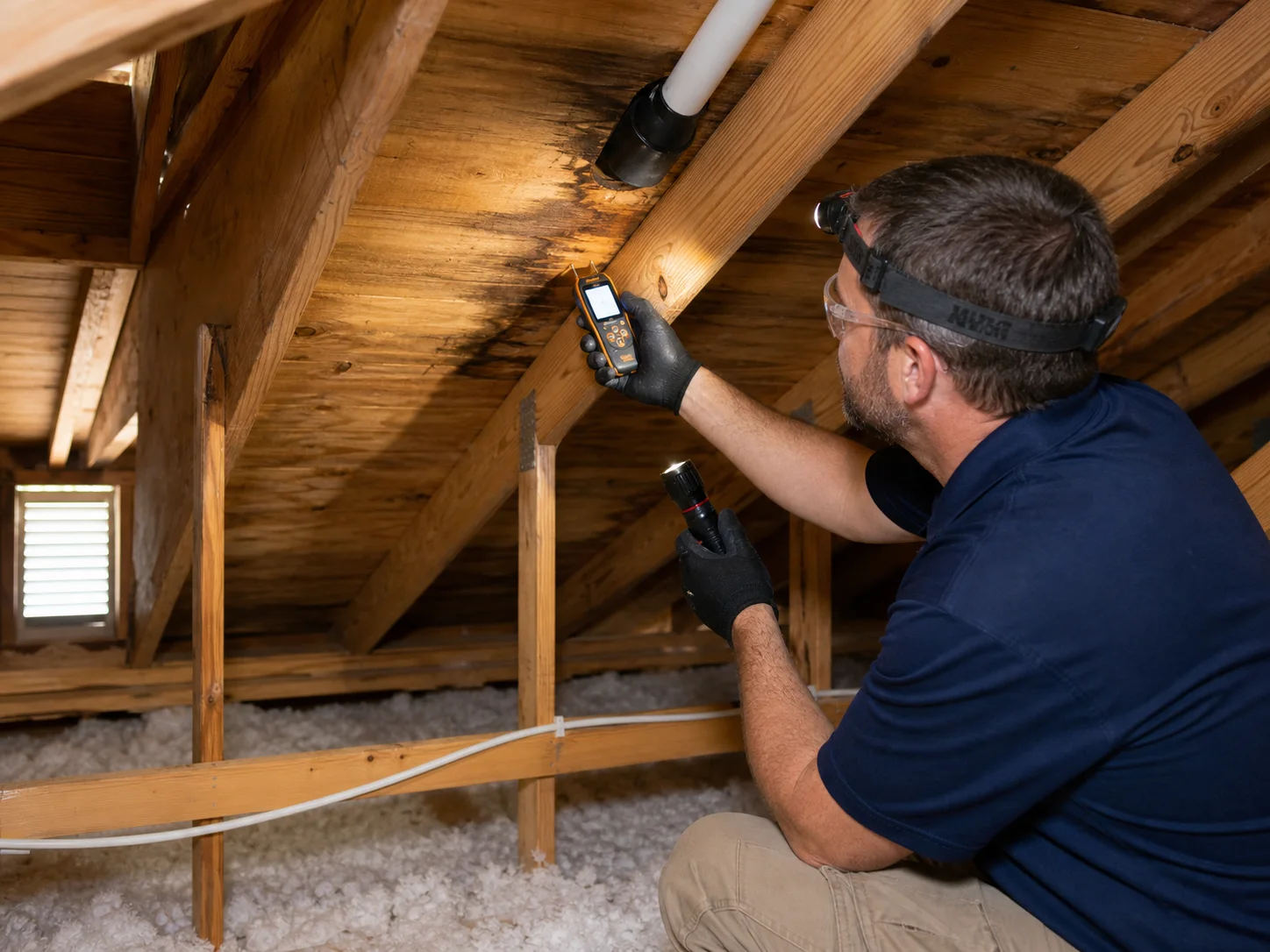 Start here
Trace water from the interior symptom to the likely roof entry point, then repair the failed area and document the work.
Find the leak source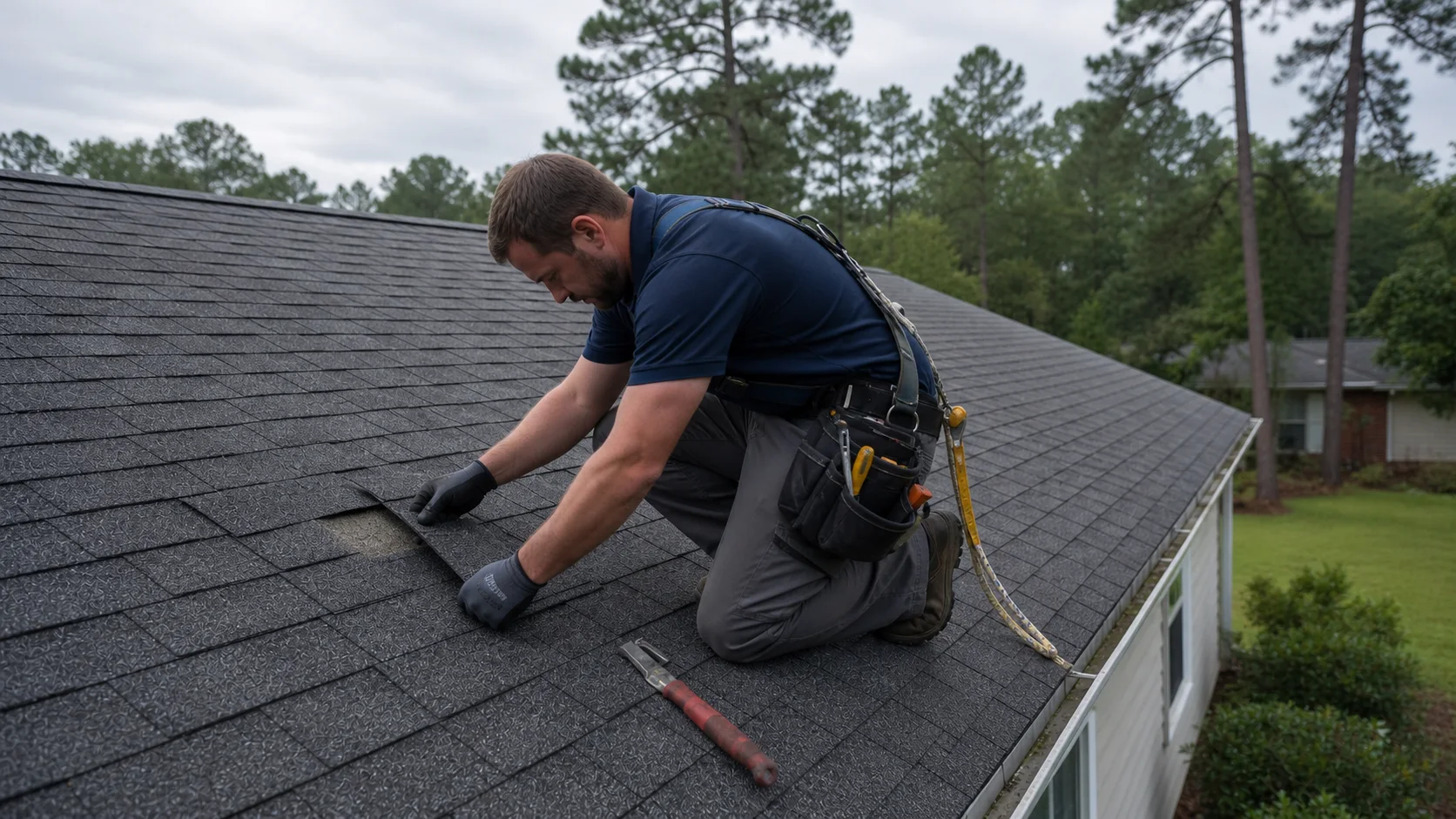 Targeted solution
Replace wind-damaged shingles, restore exposed fastener protection, and reseal vulnerable surrounding tabs.
Repair damaged shingles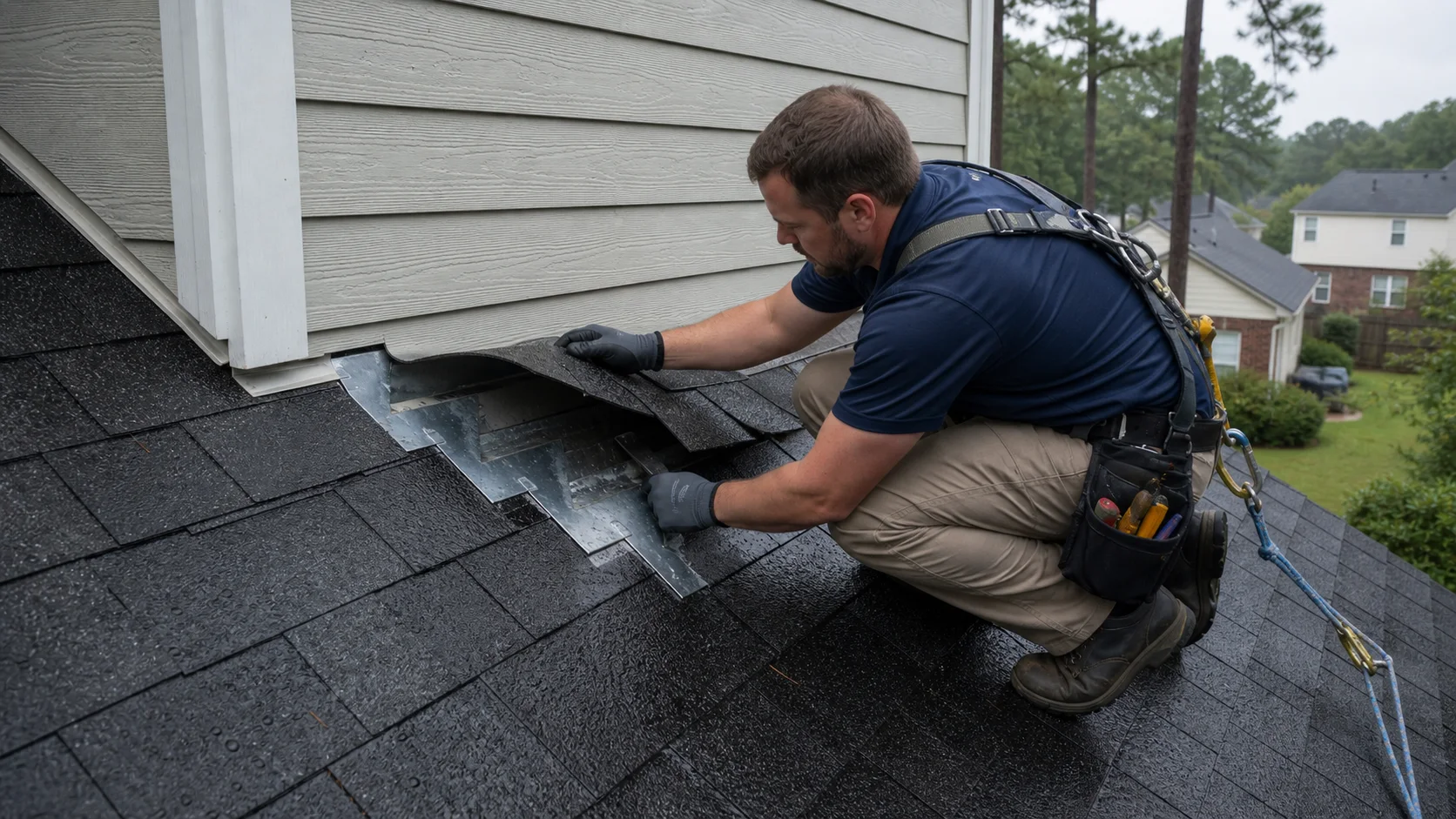 Stop hidden leaks
Correct failed flashing at chimneys, sidewalls, valleys, skylights, and transitions where water often enters.
Fix failed flashing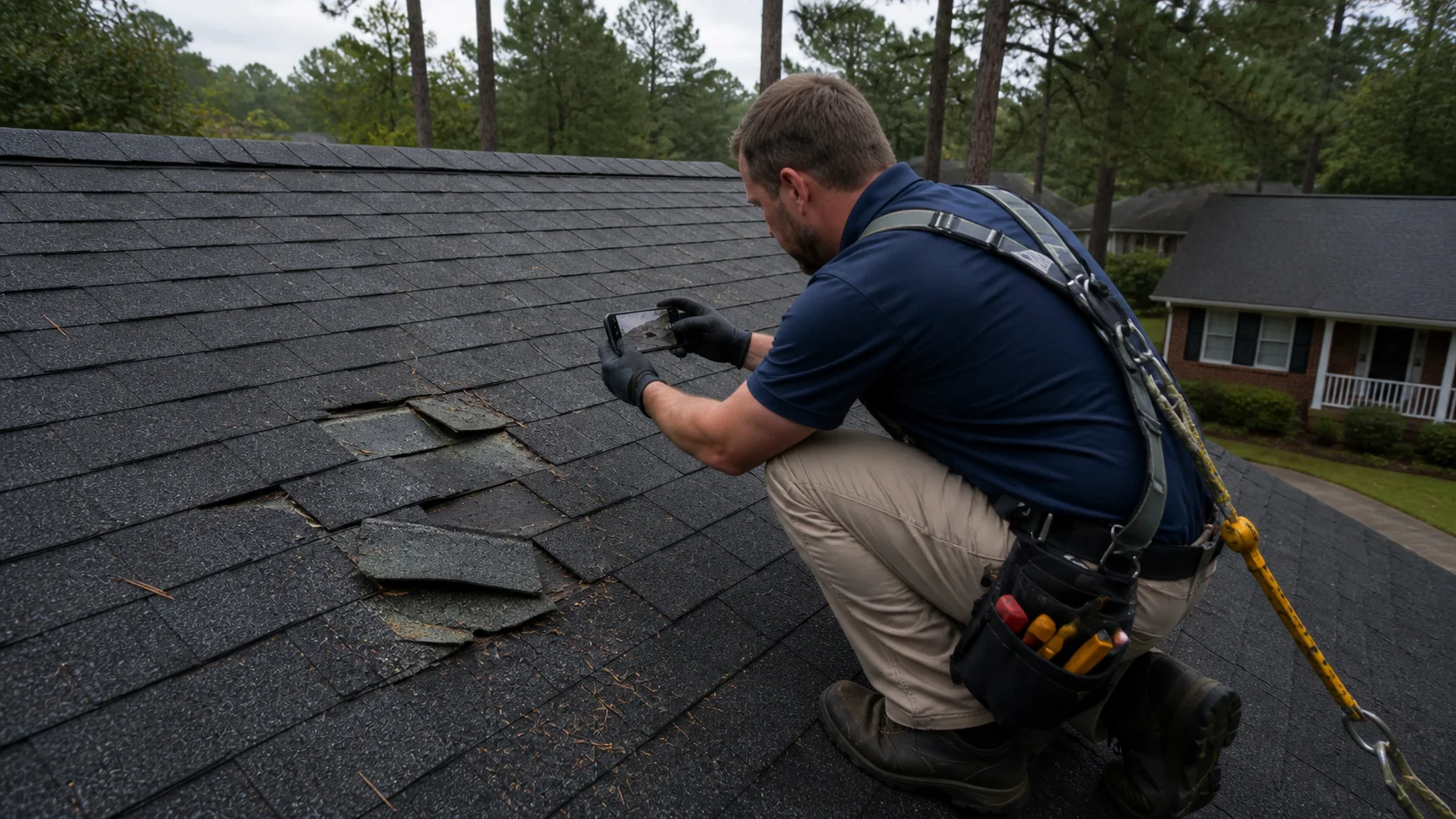 After severe weather
Stabilize and repair areas damaged by wind, hail, branches, and blown debris, with clear photo documentation.
Get storm repair help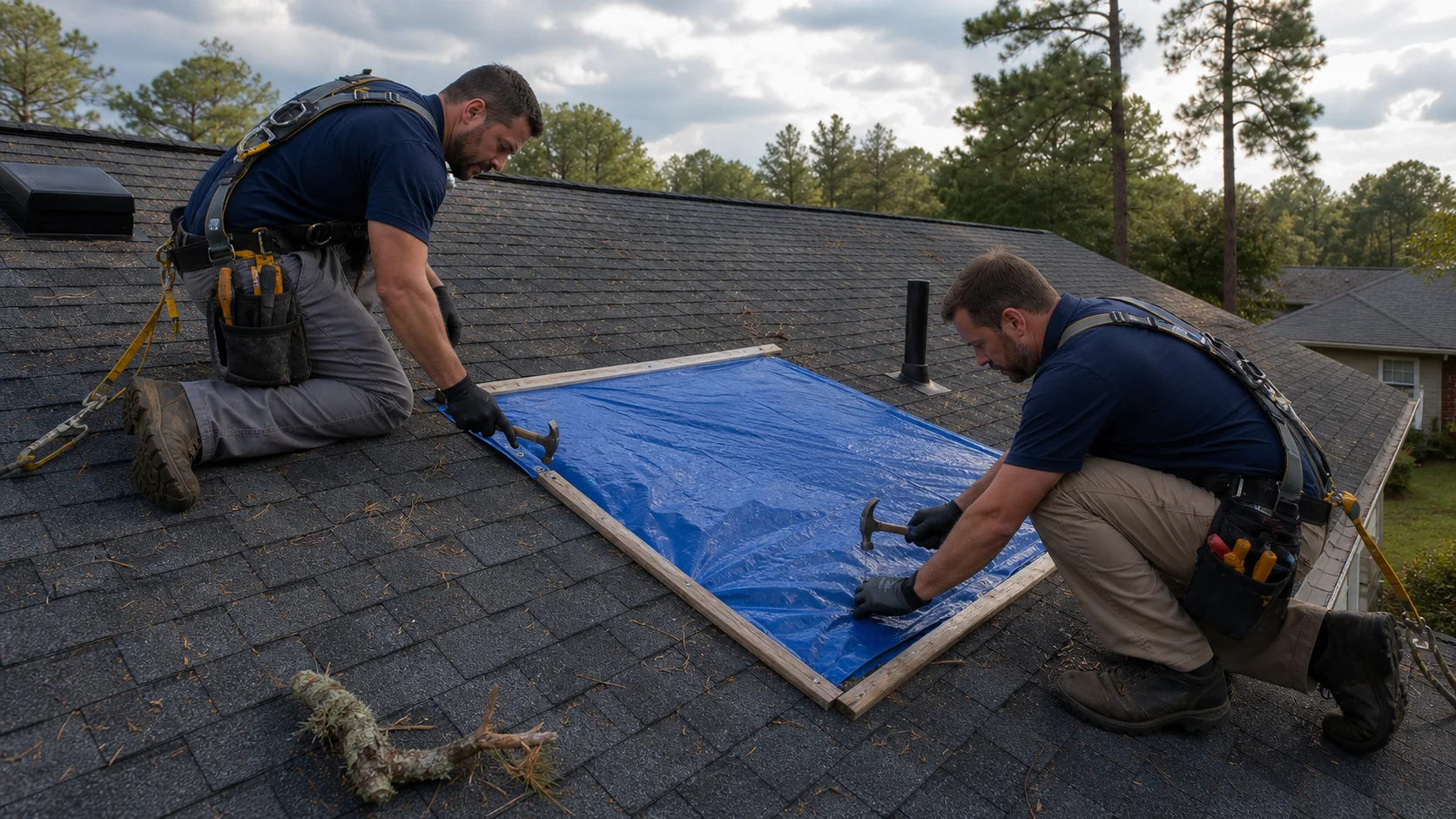 Emergency service
Temporary weather protection designed to reduce additional exposure until conditions allow a permanent roof repair.
Explore emergency tarping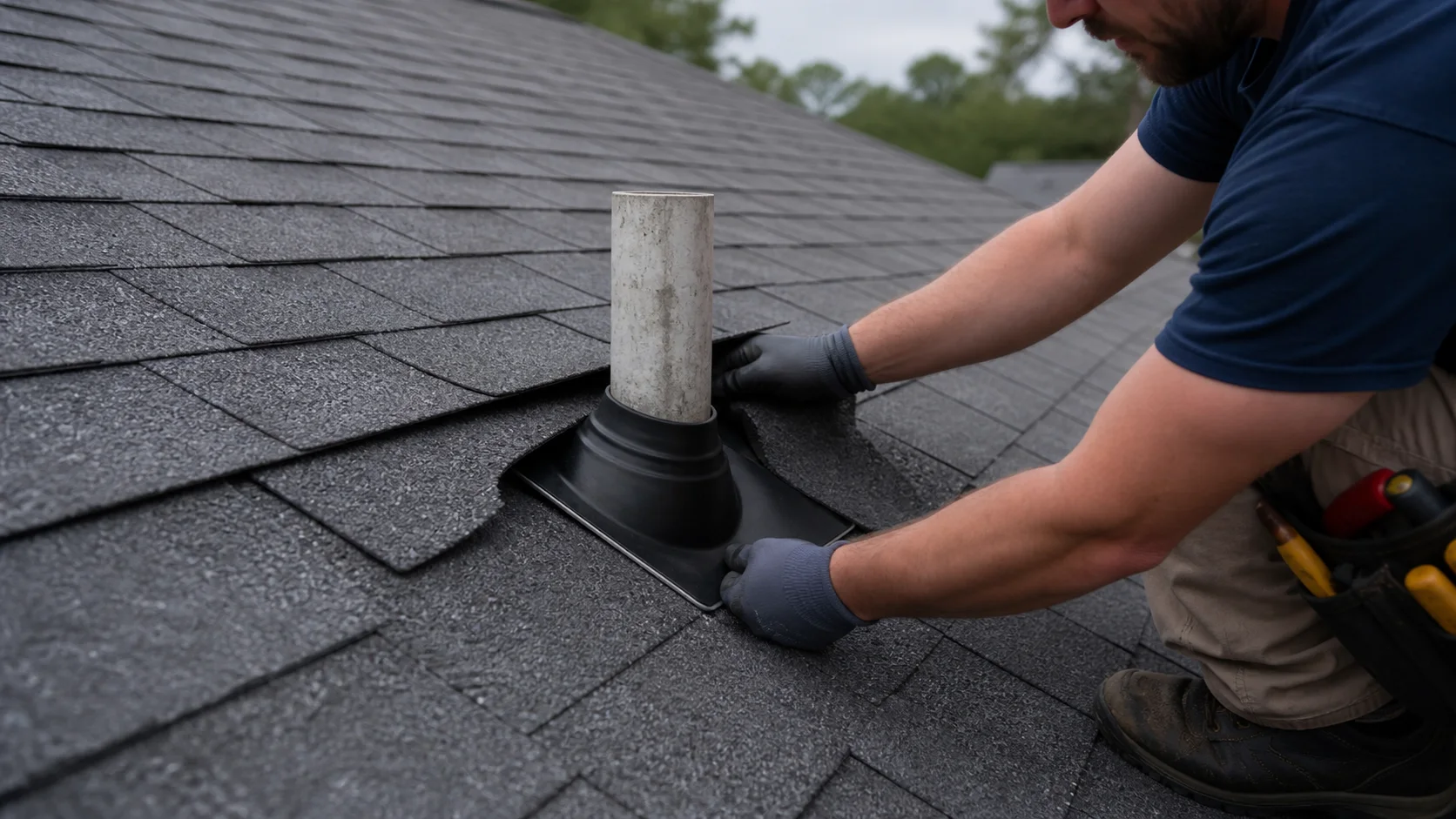 Common leak point
Repair cracked pipe boots and failed seals around vents, fasteners, and other roof penetrations.
Repair a roof penetration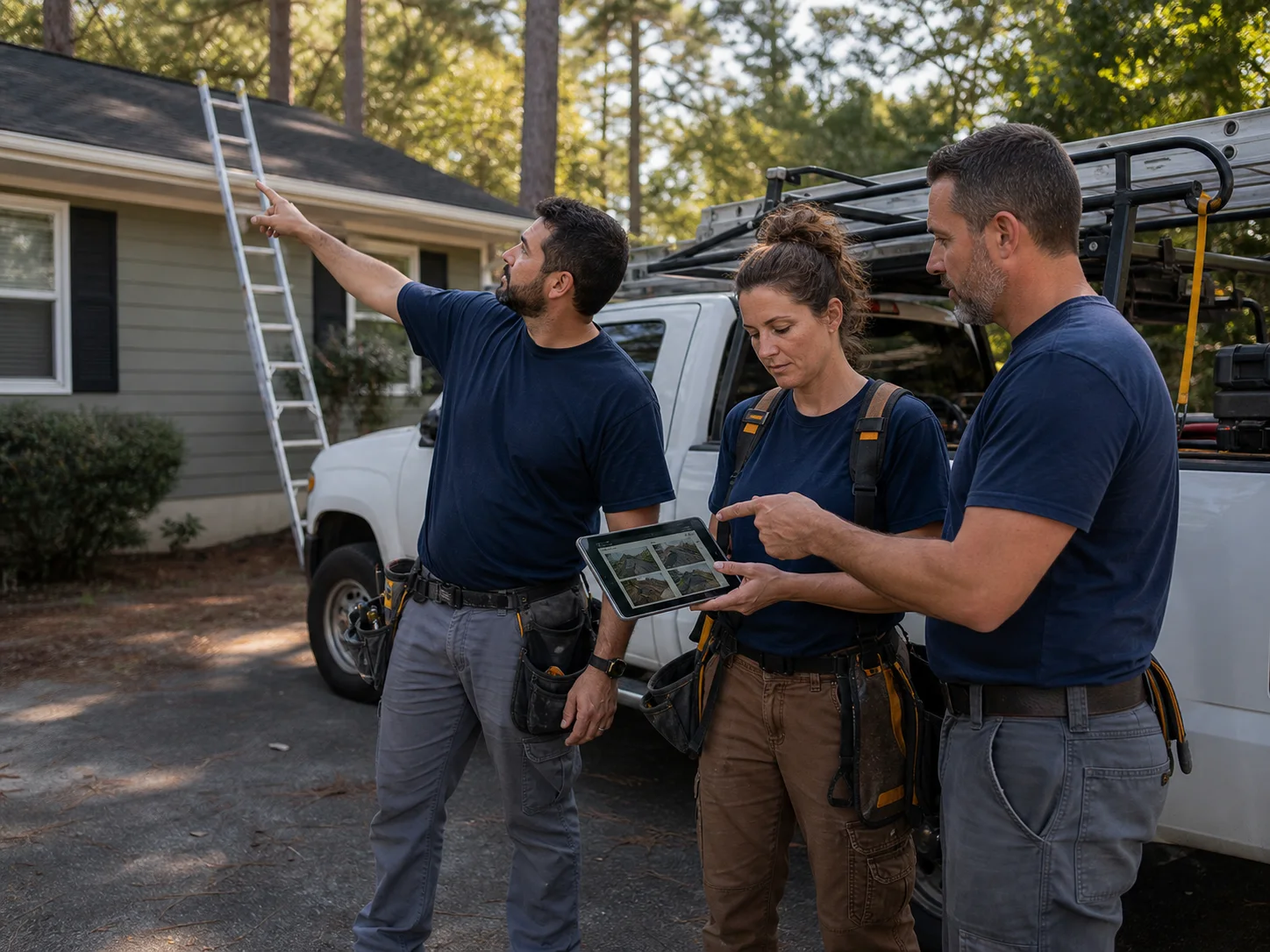
The Dogwood Ridge approach
Homeowners should not need to decode roofing jargon or wonder whether a small leak demands a giant project. Our approach is simple: trace the failure, explain what we see, and define a focused repair that matches the condition we found.
Roof repairs, up close
These repair categories explain diagnosed problems, focused fixes, and post-repair details. Representative imagery is used until verified local project photography is available.
After wind, hail, or falling limbs
We inspect the affected area, photograph visible conditions, address immediate weatherproofing needs, and define the repair scope. You receive clear records to use in any conversation with your insurer.
For immediate safety hazards, contact emergency services before approaching the structure.
A simple roof repair process
You know what failed, how the repair addresses it, and what to watch after the work is complete.
Call, text, or request an inspection. Share where you see water, damage, missing materials, or storm impact.
A roof professional follows the evidence, checks common failure points, and photographs the likely source.
Review the findings, focused repair plan, and clear pricing without confusing technical language.
The agreed repair is completed, the area is checked, and you receive a final review of the work.
What to expect
Verified customer reviews will be added only after they are collected and approved for publication.
Inspect the likely failure point and the surrounding roof area before defining the repair.
Use photos and plain language to explain the recommended repair and its limits.
Document the repaired area and discuss any maintenance or monitoring needs.
Proudly serving the Fayetteville area
The repair area centers on Fayetteville and nearby communities, with scheduling based on urgency, repair needs, and travel time.
Check repair availability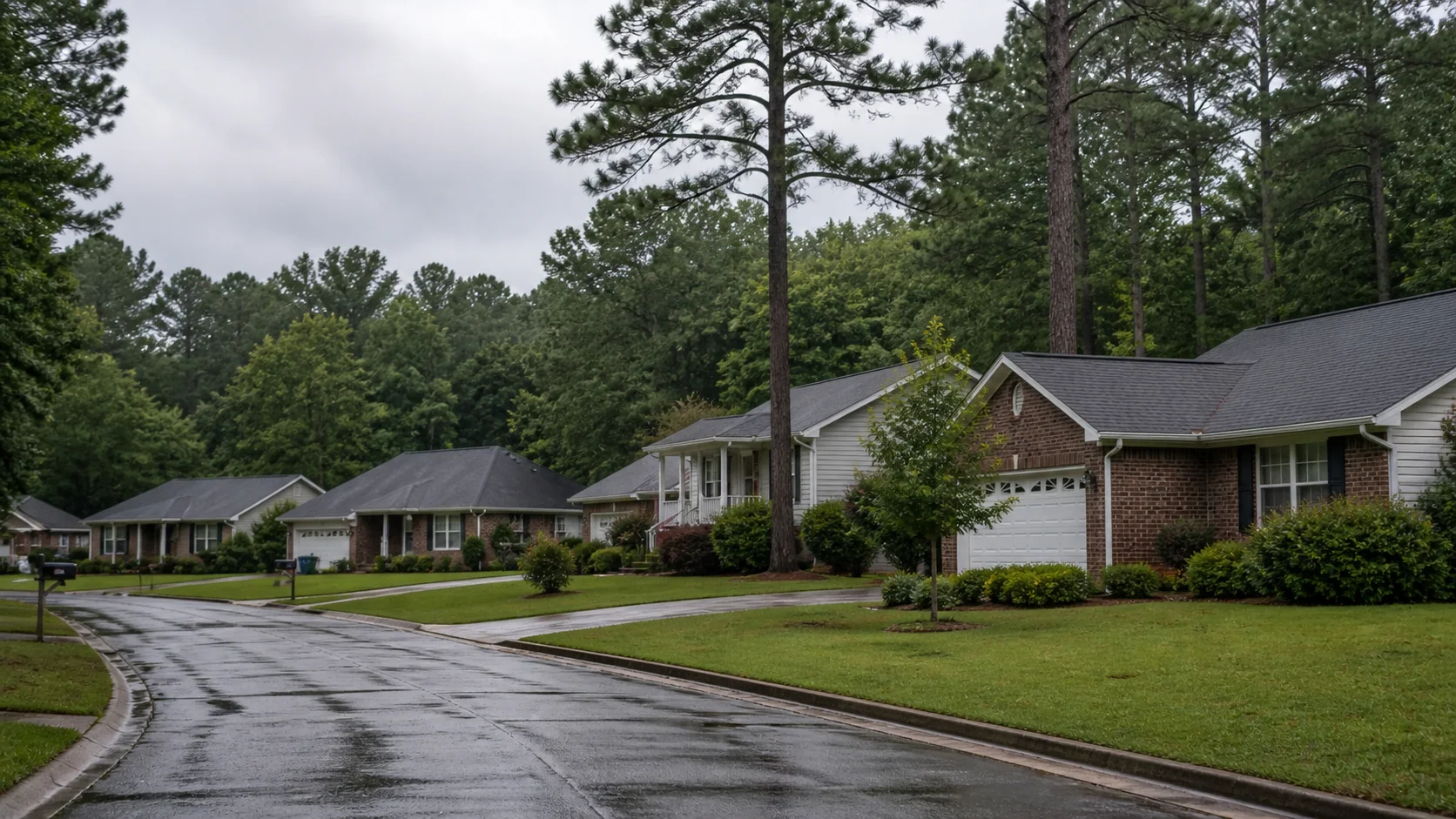
Roof repair questions, answered
As soon as it is safe to do so. Water can travel beyond the entry point and damage insulation, decking, drywall, and finishes. A prompt inspection helps locate the source and limit additional exposure.
Safety and roof conditions determine what is possible. Emergency weatherproofing may be available when conditions permit, while the permanent repair is scheduled for a safe, dry window.
The repair process works backward from interior symptoms, checking nearby shingles, flashing, seams, valleys, penetrations, and accessible attic conditions before defining a repair.
Often, yes. The surrounding shingles, underlayment, and deck must be checked first. If the localized area is serviceable, damaged shingles can be matched, secured, and sealed as part of a focused repair.
We would document why the repair cannot safely or reliably solve the problem and explain the boundary before any work begins. The repair process is built to make that judgment transparent, not to turn every inspection into a larger sale.
Start with a local, repair-focused inspection request.